| Issue #5 · Sep 2026 |
| The Naviflow Brief Est. May 2026 · Free · Every Three Weeks Curated intelligence for logistics operators, importers, exporters & freight professionals | Issue #5 — The Cascade Edition Routes reopen.
Costs are shifting. MSC returned four Asia–Europe services to Suez on August 24, while Maersk has moved more than 30% of its previously Cape-routed volume back through the canal. September also brings new Panama Canal surcharges and a revised 5–15% rise in air-freight rates. The al-Dabousiyah crossing is due to reopen, adding another option for Lebanon–Gulf overland cargo. | 1,090 Suez transits in the four weeks to Aug 20 — highest since Jan 2024 | +5–15% Xeneta’s revised full-year 2026 air-freight rate outlook | $500/TEU CMA CGM’s Panama Canal surcharge from September 10 |
| In This Issue · 30-Second Read 01 Suez traffic hits a two-year high as MSC formally returns to the canal. 02 Panama Canal surcharges stack into September — a fresh $500/TEU from CMA CGM. 03 Air freight rates flip to +5–15% for 2026 as AI hardware pulls demand up. 04 AI crosses from pilot to proof; Lebanon–Syria gains a second border crossing. | 1 Operational Challenges Panama Canal surcharges increase for September Panama Canal charges rise in September. CMA CGM will add $500/TEU on Far East cargo to the US East Coast and Gulf from September 10, while MSC increases its charge to $149/TEU two days later. Hapag-Lloyd already applies $130/TEU, and the canal’s draft limit falls to 47.5 feet. $500/TEU CMA CGM Panama surcharge, effective Sept 10 |
| 47.5 ft September draft limit — 5% below maximum |
|
Naviflow’s Take September quotes should include each canal charge as a separate line item. Older rate sheets may understate the landed cost of Panama-transiting cargo. Air-freight outlook rises to 5–15% for 2026 Xeneta now expects 2026 shipper contract rates to rise 5–15%, revising its December forecast. Conflict removed 12% of global air-cargo capacity in February, while AI-hardware shipments helped lift June demand 7% year on year. Capacity recovered by about 3%, and global rates rose 17% in H1. +5–15% 2026 air-freight outlook, revised up from -5 to -10% |
| 12% Global air-cargo capacity removed by Feb escalation |
|
Naviflow’s Take Air-freight budgets based on the December forecast may be up to 25 percentage points below Xeneta’s current range. Contract assumptions need an immediate review. | 2 Tech & AI Solutions State of Logistics Report finds measurable value from AI The 37th State of Logistics Report puts US business logistics costs at $2.6 trillion, equal to 8.7% of GDP. Produced by Kearney for CSCMP, it finds measurable operational value from AI in daily workflows across carriers, brokers and shippers, alongside continued pressure from tariffs, geopolitics and network redesign. $2.6T US business logistics costs — 8.7% of GDP |
| 89K US truckload carriers that have exited since 2022 |
|
Naviflow’s Take The useful signal is the report’s focus on daily operational results. Teams evaluating AI should assess specific workflows, measurable time savings and error reduction. 40% of trade teams now explore AI or blockchain Thomson Reuters Institute reports that 40% of trade organisations are exploring AI or blockchain, up from 6% in 2024. Tariff changes now affect sourcing, classification, landed cost and compliance in quick succession, increasing demand for faster review and decision support. 40% Trade orgs exploring AI or blockchain in 2026 |
| 6% The same figure two years earlier, in 2024 |
|
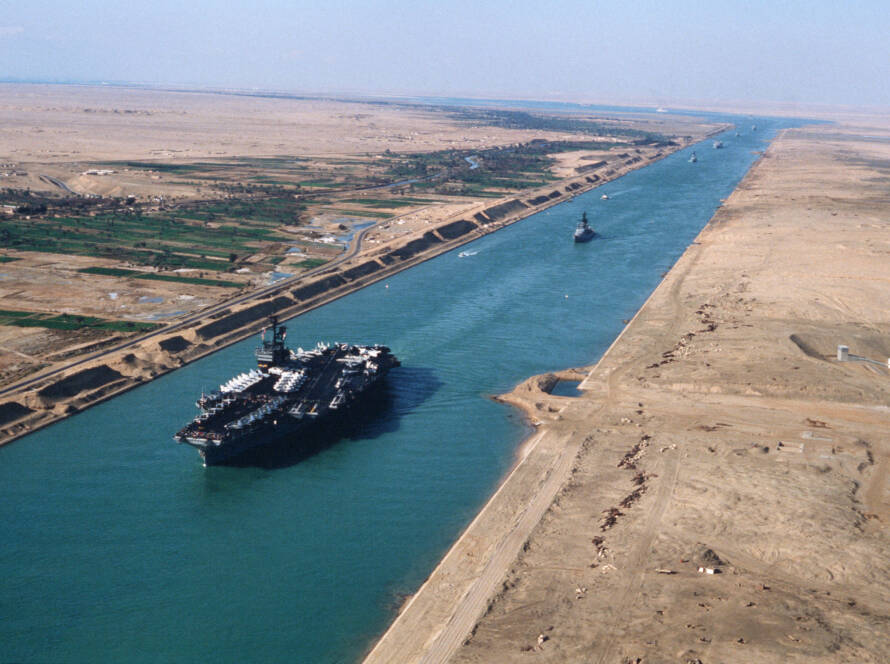
Naviflow’s Take The increase reflects a practical need to process tariff and classification updates faster. Strong data quality and defined review controls remain essential. | 3 The Landscape MSC returns four Asia–Europe services to Suez MSC returned four Asia–Europe services to Suez on August 24. The canal recorded 1,090 transits in the previous four weeks, its highest volume since January 2024, although traffic remains 41% below pre-crisis levels. Maersk has also shifted more than 30% of its previously Cape-routed Asia–Europe volume back to Suez. 1,090 Suez transits in the past 4 weeks — highest since Jan 2024 |
| 30%+ Maersk Asia–Europe volume returned to Suez |
|
Naviflow’s Take The return of major carrier services strengthens the case for reviewing Red Sea diversion charges. September invoices will show how quickly pricing follows the route changes. Al-Dabousiyah reopening adds a Lebanon–Syria route Syria’s border authority says the al-Dabousiyah crossing with Lebanon will reopen in early September, easing pressure on Jdeidet Yabous. Syria and Jordan are also aligning transit procedures, and Turkey plans to reopen the Turkey–Syria–Jordan–GCC corridor in 2026. About 100,000 trucks crossed Syria annually before 2011. Sept 2026 al-Dabousiyah crossing reopens on the Lebanon–Syria border |
| ~100K Trucks a year that crossed Syria pre-2011 |
|
Naviflow’s Take Al-Dabousiyah could add useful capacity for Lebanon–Gulf cargo. Its value will depend on customs requirements, processing times and consistent access after reopening. | ✓ What to do now Three practical checks · one-minute read ✓ Review quoted and invoiced surcharges every week. Track Panama additions separately and check September Suez invoices for changes to Red Sea diversion fees. ✓ Update the air-freight budget. Use Xeneta’s revised 5–15% range when reviewing contracts and Q4 shipment costs. ✓ Run a pilot through al-Dabousiyah after reopening. Record document requirements, customs processing time and access consistency before adding it to regular routing plans. | From Naviflow See how operations teams stay on top of every shipment Naviflow is the AI-powered shipment operations platform for mid-market importers, exporters and traders — bringing shipment coordination, document visibility, ownership and next steps into one operational workspace. Explore the platform → naviflow.ai |
| About The Naviflow Brief The Naviflow Brief is a free newsletter published every three weeks for logistics operators, importers, exporters and freight professionals. It gives busy teams a concise, independent view of industry developments and their operational impact. Every issue is written by the Naviflow team using primary sources and leading trade publications. ① Operational Challenges — the day-to-day friction: broken workflows, manual bottlenecks, rising costs, and the problems teams are quietly dealing with. ② Tech & AI Solutions — what operators are actually deploying: platforms, AI agents, automation tools, and case studies from the industry. ③ The Landscape — the forces outside your control: geopolitics, tariffs, port congestion, regulation, and trade lane shifts you need to know about. The Naviflow Brief is independent editorial content — we write it because we believe an informed industry is a better industry. | |
|