Skip to content Skip to footer

The Naviflow Brief Issue #2

Naviflow Issue #2 · June 2026
The Naviflow Brief
Est. May 2026 · Free · Every Three Weeks
Curated intelligence for logistics operators, importers, exporters & freight professionals
Issue #2 — Reopening & Realignment Edition
The strait is reopening.
And the map is being redrawn.
A US–Iran deal to reopen the Strait of Hormuz — slowly. Saudi Arabia lifting its five-year ban on Lebanese goods. Documentation emerging as the next bottleneck, and Lebanon holding its place among the Arab world's top AI adopters. Here's what's moving — and what it means for operators in Lebanon and beyond.
June 19Target date for full Strait of Hormuz reopening & signing
5 yrsSaudi import ban on Lebanon, now lifted
3–4 moExpected time for Hormuz shipping to normalise
1
The Strait of Hormuz is reopening — but don't tear up your rate sheet yet
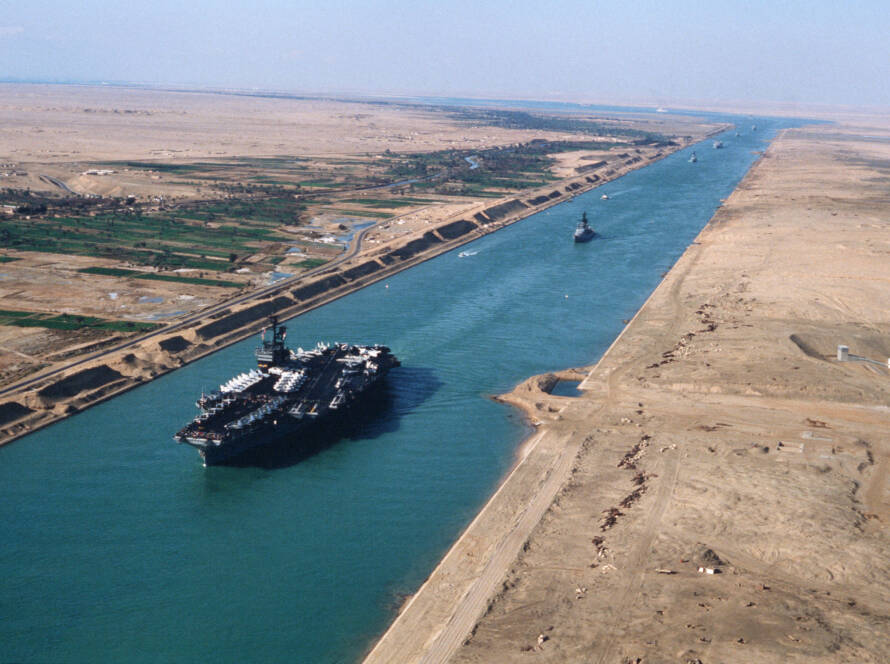
After roughly 100 days effectively closed, the strait is finally moving toward reopening: the US and Iran reached an interim deal, Washington lifted its naval blockade on Iranian ports on June 14, and a full, toll-free reopening is targeted for June 19. The relief, though, won't be instant. Most ships are staying put because marine insurers haven't resumed coverage, de-mining is still under way, and shipping sources expect three to four months before traffic normalises. War-risk premiums remain far above pre-crisis levels. For operators, surcharges and rates will ease gradually, lane by lane — not the moment the deal is signed.
June 19Target date for full reopening and signing
3–4 moBefore strait traffic is expected to normalise
Naviflow's Take

The headline says "open." The rate sheet says "not yet." Operators watching insurance, surcharge and routing changes lane by lane will reprice as relief actually lands — not when the press release says it should.

↗ CNN Business · Strait of Hormuz Reopening · June 2026
Saudi Arabia reopens to Lebanese goods — now comes the freight scramble
On June 10–11, Riyadh lifted the roughly five-year ban it had placed on Lebanese imports, reopening one of Lebanon's most important export markets. Before the ban, Saudi Arabia was the top destination for Lebanese agricultural exports — taking around half of what Lebanon shipped to Arab countries, worth roughly $240 million a year. The opening is welcome; the hard part is operational. Lebanon's Agriculture Ministry is convening customs, IDAL, chambers of commerce, refrigerated-truck operators and exporters to rebuild freight, transit and cold-chain mechanics — and transit visas through Syria and Jordan remain unresolved.
~$240MAnnual Lebanese exports to Saudi Arabia before the ban
5 yrsLength of the import ban now lifted
Naviflow's Take

Market access is back; the logistics to use it aren't — yet. Exporters who can run multi-leg, multi-document, temperature-controlled shipments through the Syria–Jordan corridor will capture the reopening first.

↗ Reuters / Zawya · Saudi Arabia Lifts Lebanese Import Ban · June 2026
2
As the Gulf corridor reopens, documentation becomes the bottleneck — and AI is taking it on
When Lebanese cargo moves overland to the Gulf, it crosses several borders, each with its own customs paperwork — exactly where delays accumulate. That's where AI document processing is landing fastest. Leading 3PLs now run generative AI across more than 60% of customs forms, bills of lading and freight quotes, cutting document-processing time by over 80% and removing manual entry for the bulk of volume. On multi-border lanes like Beirut–Syria–Jordan–Gulf, that's the difference between cargo clearing and cargo waiting.
60%+Of customs forms & BOLs handled by AI at leading 3PLs
80%+Reduction in document-processing time
Naviflow's Take

The reopened market rewards whoever clears fastest. Automating document extraction and customs prep is the highest-leverage place to start when every shipment crosses three borders.

↗ Appzoro · Generative AI in Logistics & Supply Chain · May 2026
Lebanon ranks among the Arab world's top AI adopters — a tailwind for operators going digital
Even through economic strain, Lebanon's tech ecosystem has proven resilient: the country now ranks among the top five Arab nations for individual AI use, backed by the World Bank's $150 million Digital Acceleration Project and hubs like the Beirut Digital District. The sector has largely dollarized — insulating it from currency swings — and draws on a multilingual talent pool trained at AUB, LAU and other universities. For logistics operators, that means the same AI reshaping global freight, from document parsing to agentic workflows, can be built and supported locally.
Top 5Arab countries for individual AI usage
$150MWorld Bank Digital Acceleration Project for Lebanon
Naviflow's Take

The talent and infrastructure to adopt freight AI are already here. Lebanese operators don't have to wait for the tools to arrive — the harder part is choosing the one workflow worth automating first.

↗ Nucamp · Inside Lebanon's Tech Hub · April 2026
3
Lebanon revives a northern airport as a cargo hub — and a second trade gateway
Lebanon is moving on long-stalled gateway infrastructure. The government has awarded a contract to operate and invest in the long-dormant René Mouawad (Qleiaat) Airport in Akkar — Sky Lounge Services won out over 18 bidders — reviving it as a low-cost and cargo facility about 27 km from the port of Tripoli. The Public Works Ministry frames it as an economic and logistics driver rather than a vanity project: added air-cargo capacity, relief for an overstretched Beirut airport, and a genuine second gateway for a trade economy that has long run through a single major airport and a single major port.
18 biddersCompeted to operate and invest in the Qleiaat airport
~27 kmNew cargo-hub airport's distance from the port of Tripoli
Naviflow's Take

Gateways are the chokepoint every importer and exporter lives with. A second airport positioned as a cargo hub near Tripoli's port adds capacity and a fallback route — worth watching for anyone whose cargo physically enters or leaves Lebanon.

↗ The New Arab · Lebanon Moves Closer to a Second Airport · 2026
Reopening the strait won't lower your costs overnight — especially in Lebanon
A reopened Hormuz should eventually restore oil, LNG and fertiliser flows and ease freight-insurance premiums across the region. But analysts warn the relief lags: earlier price spikes keep working through markets for months, LNG may not fully reflect lower costs until late 2026, and insurers move slowly. For a Lebanon that imports goods and services equal to roughly 74% of GDP — with energy alone about 29% of its 2025 import bill — that lag means the cost relief everyone's reading about arrives late, and only in part.
~74%Imports as a share of Lebanon's GDP
Late 2026When LNG prices may fully reflect the reopening
Naviflow's Take

The macro story is "relief is coming." The operator story is "not yet, and not evenly." Landed-cost visibility is what tells you when relief actually reaches your shipments — instead of assuming it already has.

↗ Reuters / Herald · Why Reopening Hormuz Won't Solve Woes Overnight · June 2026
From Naviflow
Built for the world as it actually is
Naviflow builds AI-powered shipment operations software for mid-market importers, exporters & traders.
Book a Demo → naviflow.ai