| Issue #4 · Aug 2026 |
| The Naviflow Brief Est. May 2026 · Free · Monthly Curated intelligence for logistics operators, importers, exporters & freight professionals | Issue #4 — The Chokepoint Reversal Edition The reopening didn’t hold.
And the map is being redrawn again. Last month we said the Strait of Hormuz reopening wouldn’t reach your rate sheet overnight. In July it reversed outright — fresh tanker strikes, war-risk premiums back to 7.5–10% of hull value, and crossings collapsing to a trickle. Closer to home the news runs the other way: Lebanon’s Gulf reopening keeps building, Beirut port is climbing back onto the regional map six years after the blast, and AI keeps eating the customs bottleneck. Here’s what’s moving — and what it means for operators in Lebanon and beyond. | 7.5–10% War-risk premium to cross Hormuz, as a share of hull value | ~10/day Vessels crossing Hormuz at the July low, from 120–140 normally | $500M Lebanon’s first-year export target to a reopened Saudi market |
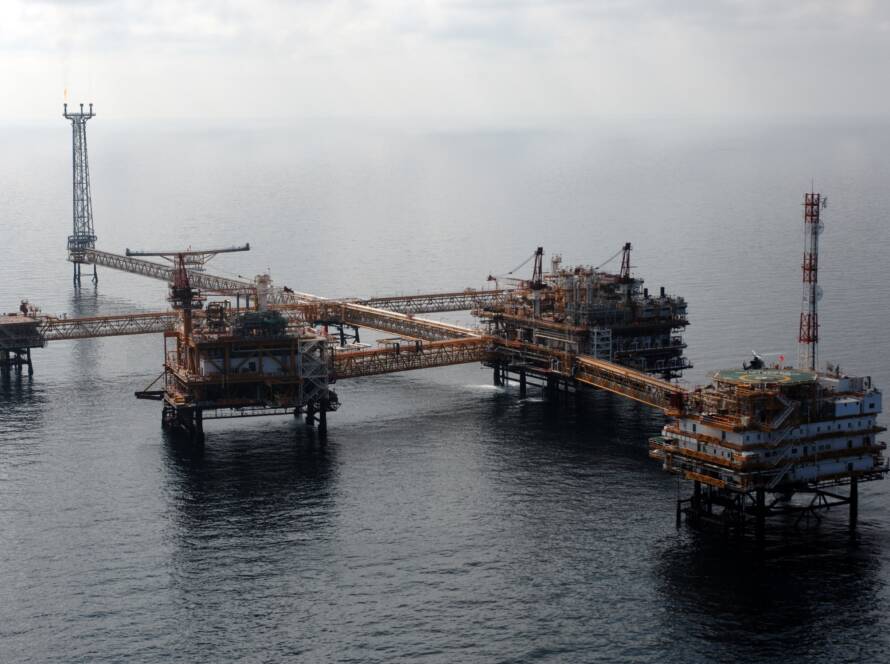
| In This Issue · 30-Second Read 01 Hormuz disruption returns — war-risk premiums back to 7.5–10% of hull value. 02 Gulf exports through Lebanon accelerate as the Saudi market reopens. 03 AI moves from pilots to operations across customs and routing. 04 Beirut Port continues its recovery, six years on. | 1 Operational Challenges You priced in the Hormuz reopening. Then July reversed it. The reopening reversed fast. Iran struck two UAE supertankers on July 15 and Tehran announced a Hormuz closure on July 19 — pushing war-risk premiums back to 7.5–10% of hull value, from a pre-crisis 0.25%. Daily crossings collapsed to about 10, from a normal 120–140; cover for one large crude tanker now nears $21 million per voyage. Expected relief never came; risk repriced the other way. 7.5–10% War-risk premium as a share of hull value |
| ~10/day Hormuz crossings at the July low, from 120–140 |
|
Naviflow’s Take Issue #3 said “not yet.” July said “not at all — for now.” The operators who kept their surcharge and routing assumptions provisional didn’t have to unwind a bet they’d already booked. The cheapest way to the Gulf now runs overland through Syria — friction included With sea lanes volatile, Lebanese exporters ship to Saudi Arabia overland via Syria at ~$3,000 per container — versus ~$7,000 by sea. The saving is real; so is the load: multi-border transit, customs paperwork per crossing, cold-chain continuity, and unresolved transit visas. The corridor rewards whoever keeps documents, temperature and timing intact across three borders. $3,000 Per container overland via Syria to the Gulf |
| $7,000 Per container by sea, the route being displaced |
|
Naviflow’s Take Lower freight cost, higher coordination cost. The margin moves to whoever can keep a multi-document shipment on track without a single handoff breaking. | 2 Tech & AI Solutions Customs clearance is where the delay lives now — and AI is taking it on When shipments cross borders, the bottleneck moves from sea to paperwork, where AI lands hardest. US Customs’ ACE 2.0 clears entries ~40% faster, flagging risk before arrival. Document AI tackles the 80–90% of business data that’s unstructured — forms, BOLs and invoices that IBM-cited research ties to over $600 billion in yearly data-entry losses. On a Beirut–Syria–Jordan–Gulf lane, cleaner docs mean clearing, not waiting. 40% Faster customs entry processing under ACE 2.0 |
| $600B+ Lost annually to data-entry errors, per IBM-cited research |
|
Naviflow’s Take The reopened market rewards whoever clears fastest. Standardising and front-loading document handling is the highest-leverage first move when every shipment crosses three borders. Agentic AI moves from demo to dispatch The 2026 shift is from AI that summarises to AI that acts. Agentic systems run routing, scheduling and warehouse coordination — handling hundreds of thousands of emails and millions of voice-minutes. McKinsey, cited in the same review, puts AI-driven logistics at 15–20% cost and 10–35% inventory cuts. The point isn’t replacing the team — it’s handing each person agents for repetitive work. 15–20% Logistics cost reduction from AI-driven operations |
| 10–35% Inventory reduction through better AI forecasting |
|
Naviflow’s Take The tools crossed from “interesting” to “operational” this year. The advantage goes to teams that pick one workflow and let agents run it end-to-end — not the ones still evaluating. | 3 The Landscape Lebanon’s Gulf reset gets a royal push — and a customs upgrade A Saudi royal order — via the Kingdom’s Foreign Trade Authority and Federation of Saudi Chambers — reopened the market to Lebanese goods, first shipment June 20. Exporters target $500 million in year one and $1–1.5 billion within three years; before the 2021 ban, Saudi Arabia took ~85% of Lebanon’s Gulf exports and ~12% of the total. Beirut backs it with new port scanning — pledging Lebanon won’t be “a launchpad for harm against its Arab brothers.” $500M First-year Lebanese export target to Saudi Arabia |
| ~85% Saudi share of Lebanon’s Gulf exports before the ban |
|
Naviflow’s Take This is a direction, not a one-off. Plan for Gulf-facing demand to keep building — and for the compliance scrutiny that comes with a market you’re being trusted with again. Six years on, Beirut port is climbing back onto the regional map August 4 marks a somber anniversary, but Beirut port’s story is now one of recovery. Throughput has rebuilt to ~800,000 TEU, toward the 1.2 million handled before the 2020 blast. CMA Terminals is midway through a ten-year concession and $33 million modernisation — new equipment, digital systems, a maintenance facility — lifting capacity toward 1.4 million TEU. A French-backed rebuild, funded from port revenue, will repair and re-lay it. With the Gulf reopening, Beirut can reclaim an eastern-Mediterranean gateway role. ~800K Annual TEU throughput, rebuilt toward the pre-blast 1.2M |
| 1.4M TEU capacity target under the terminal modernisation |
|
Naviflow’s Take A functioning, modernised Beirut port changes the math on every Lebanese shipment — shorter dwell, steadier schedules, and a credible home base as Gulf demand returns. Watch berth reliability and capacity, not the anniversary headlines. | ✓ Operator Actions This month we recommend · one-minute read ✓ Review your Gulf routing assumptions. Model the Syria overland corridor (~$3,000/container) against sea (~$7,000) before you commit Q4 lanes. ✓ Recheck carrier surcharges weekly. War-risk premiums (7.5–10% of hull value) will move faster than any published rate sheet. ✓ Prepare customs documentation earlier. On multi-border Gulf lanes, paperwork — not freight — is where the delay lands. ✓ Audit your document handoffs. One broken handoff between legs quietly undoes the routing savings you just captured. | Naviflow Insight Across the shipment workflows we work on with mid-market teams, the bottleneck this summer hasn’t been ocean capacity — it’s documentation latency. When a lane suddenly reroutes — Hormuz to overland, sea to the Syria corridor — the delay that actually costs money is re-cutting customs paperwork for a new set of borders, not the freight itself. The operators absorbing the July volatility best are the ones who’d already standardised their shipment data and document checks, so a routing change becomes a data change instead of a manual redo. |
| Looking Ahead Watch Gulf carrier pricing over the coming weeks. Even if vessel traffic improves, war-risk premiums are likely to stay elevated until insurers see sustained stability — so expect surcharges to lag any “reopening” headline. On the Lebanon side, the first real test is whether the Syria overland corridor can clear cold-chain produce on schedule; that, more than the political goodwill, will decide how much of the $500M export target actually moves this year. | From Naviflow See how operations teams stay on top of every shipment Naviflow is the AI-powered shipment operations platform for mid-market importers, exporters and traders — bringing shipment coordination, document visibility, ownership and next steps into one operational workspace. Explore the platform → naviflow.ai |
| About The Naviflow Brief The Naviflow Brief is a free newsletter published monthly for logistics operators, importers, exporters, and freight professionals navigating an increasingly complex global trade environment. Its purpose is simple: to give busy operators a sharp, honest read on what is moving the industry — not sales content, not press releases, but curated intelligence with a clear operational angle. Every issue is written by the Naviflow team from primary sources and leading trade publications, summarised in our own words, and filtered for one question: what does this mean for someone actually running shipments? ① Operational Challenges — the day-to-day friction: broken workflows, manual bottlenecks, rising costs, and the problems teams are quietly dealing with. ② Tech & AI Solutions — what operators are actually deploying: platforms, AI agents, automation tools, and case studies from the industry. ③ The Landscape — the forces outside your control: geopolitics, tariffs, port congestion, regulation, and trade lane shifts you need to know about. The Naviflow Brief is independent editorial content — we write it because we believe an informed industry is a better industry. | |
|