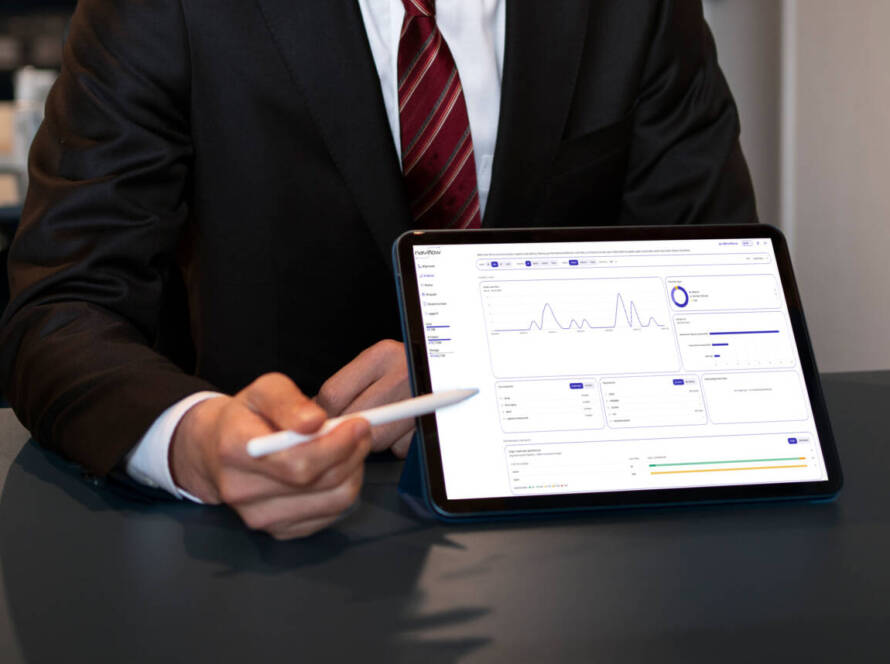
Shipment management software helps importers, exporters and logistics teams manage shipments, documents, milestones and communication from one centralized platform. Unlike basic shipment tracking tools, it supports the operational work behind every shipment, improving visibility, accountability and collaboration throughout the shipment lifecycle.
Shipment management software helps companies organize the operational work involved in managing shipments.
For importers, exporters and trading companies, a shipment is rarely just a movement from one place to another. Each shipment may include purchase orders, suppliers, freight partners, shipping documents, milestone updates, internal approvals, delivery expectations and communication between different teams.
When shipment volumes are low, many businesses manage this work through spreadsheets, email threads and shared folders. That can work at the beginning. But as shipment volumes grow, these tools often become harder to control.
Information becomes scattered. Documents are stored in different places. Teams spend more time searching for updates. Managers lose visibility across active shipments.
Shipment management software gives companies a more structured way to manage shipment information, documents, milestones and collaboration throughout the shipment lifecycle.
Shipment management software is a digital platform used to manage shipment-related information, documents, milestones and communication in one organized workspace.
Its purpose is to help teams understand what is happening across shipments and manage the operational details that support each shipment.
Depending on the platform, shipment management software may help teams:
- Organize shipment records
- Track shipment milestones
- Store and manage shipment documents
- Coordinate internal teams
- Keep supplier and freight partner updates connected to shipments
- Improve visibility across active shipments
- Reduce manual follow-ups
- Create a more consistent shipment operations process
At its simplest, shipment management software gives teams one place to manage the information around each shipment.
Shipment tracking usually focuses on one question:
Where is the shipment?
That question matters, but it does not cover the full operational picture.
Shipment management software is broader. It helps teams manage the information and work surrounding the shipment, not only the shipment’s location or transport status.
A logistics team may also need to know:
- Whether the shipment has been booked
- Whether the supplier has shared the required documents
- Whether the bill of lading has been received
- Which shipments need attention today
- Which documents are still missing
- Whether proof of delivery has been completed
Tracking can show movement. Shipment management helps organize the operational context around that movement.
This distinction matters because many shipment problems are not caused by lack of tracking alone. They are caused by scattered information, unclear ownership, missing documents and manual coordination.
Why companies use shipment management software
Companies use shipment management software when shipment operations become too complex to manage through disconnected tools.
A spreadsheet can record shipment details. An email inbox can hold supplier updates. A shared folder can store documents. But when those tools are used separately, teams still need to connect the information manually.
This can create common problems:
- Different people work from different versions of the same information
- Shipment updates remain inside email threads
- Documents are saved in different places
- Managers need to ask for status updates manually
- Teams spend time checking what is missing
- Shipment information becomes harder to trust
Shipment management software helps reduce this friction by connecting shipment information, documents and updates around the shipment itself.
The value is not only having more information. The value is having information organized in a way teams can use.
What shipment management software usually includes
The exact features vary by platform, but most shipment management software supports a few core areas.
Shipment records
A shipment record gives teams one place to store key information about a shipment.
This may include shipment references, suppliers, customers, expected dates, shipment status, transport details, related documents and operational notes.
The shipment record becomes the central place where teams can understand the context of that shipment.
Shipment milestones
Milestones are key events in the shipment lifecycle.
Examples may include:
- Purchase order created
- Shipment booked
- Departed origin
- Arrived at destination
- Documents received
- Delivery completed
- Proof of delivery received
Milestones help teams understand where each shipment stands and what may need attention next.
Shipment documents
International shipments usually involve several documents, such as commercial invoices, packing lists, bills of lading, certificates of origin and proof of delivery records.
Shipment management software helps teams keep documents connected to the correct shipment, reducing the need to search across emails, folders and separate file systems.
Team collaboration
Shipment operations often involve more than one department.
Purchasing, logistics, supply chain, finance, sales and management may all need shipment information at different stages.
Shipment management software helps teams keep shipment-related communication and updates connected to the shipment, making it easier for people to work from the same operational view.
Operational visibility
Operational visibility means understanding what is happening across shipments, documents, milestones and required actions.
It is not only about seeing where cargo is. It is also about knowing whether information is complete, whether documents are available and whether something needs attention.
How shipment management software supports daily operations
In daily operations, shipment management software helps teams reduce the time spent switching between disconnected tools.
Without a structured platform, a logistics coordinator may need to check a spreadsheet for shipment status, search an email thread for a supplier update, open a shared folder for documents and ask a colleague whether the latest information is correct.
With shipment management software, the team can start from the shipment record, review the latest operational context, check related documents and understand what is happening from one workspace.
This does not remove the need for experienced logistics teams. It gives those teams a clearer structure for managing shipment work.
How AI can support shipment management
AI can support shipment management when it helps teams access shipment information and operational context more efficiently.
In many companies, the challenge is not that information does not exist. The challenge is that information is spread across different tools and conversations.
In a shipment operations platform, AI-powered assistance can support the user experience by helping teams work with shipment context from a connected workspace instead of searching across disconnected tools.
The purpose of AI in shipment management should not be to replace operational expertise. It should support teams by making shipment information easier to access and easier to work with.
Who typically uses shipment management software?
Shipment management software is commonly used by companies that manage shipments regularly and need better control over shipment information.
It is especially relevant for:
- Importers managing supplier shipments, documents and expected arrivals
- Exporters coordinating customer shipments, documents and delivery commitments
- Trading companies managing shipments across multiple suppliers, customers and countries
- Supply chain and logistics teams responsible for shipment coordination and visibility
This page explains the software category. For a more detailed guide on fit, read:
Shipment management software vs other business systems
Shipment management software does not replace every system a company may use.
It is not designed to replace:
- Enterprise resource planning systems
- Customer relationship management systems
- Accounting software
- Customs brokerage software
- Warehouse management software
- Fleet management software
Those systems serve different business purposes.
Shipment management software focuses on the operational work around shipments: shipment records, documents, milestones, visibility and collaboration.
For many companies, it works alongside existing systems by giving logistics and supply chain teams a dedicated workspace for shipment operations.
When does a company need shipment management software?
A company may need shipment management software when its current process becomes difficult to control.
Common signs include:
- Shipment spreadsheets are becoming harder to maintain
- Shipment documents are difficult to find
- Teams spend too much time asking for updates
- Managers do not have clear visibility across active shipments
- Shipment information is stored across too many tools
- Multiple team members are working on the same shipments
- Shipment volumes are increasing
- Manual follow-ups are slowing the team down
A manual process may work for a small number of shipments. As the business grows, the same process can become harder to manage, harder to trust and harder to scale.
What should companies look for in shipment management software?
When evaluating shipment management software, companies should focus on whether the platform helps solve real operational problems.
Useful questions include:
- Does it centralize shipment information?
- Does it keep documents connected to shipments?
- Does it show shipment milestones clearly?
- Does it help teams work from the same information?
- Does it reduce repeated manual follow-ups?
- Does it support daily shipment operations?
- Is it easy for the team to understand and use?
- Does it fit the way the company manages international shipments?
- What does its AI functionality actually support in daily shipment operations?
The right platform should make shipment operations easier to manage, not more complicated.
How Naviflow supports shipment management
Naviflow helps importers, exporters and trading companies manage international shipment operations from one connected platform.
It brings together shipment information, shipment documents, collaboration and AI-powered access to operational context, helping teams work with better visibility and control.
Naviflow is focused on shipment operations. It is not designed to replace every business system a company uses. Instead, it helps teams centralize the shipment work that often becomes scattered across spreadsheets, emails, shared folders and separate conversations.
For companies managing recurring international shipments, Naviflow provides a structured way to manage shipment operations from purchase order to proof of delivery.
Ready to see shipment management software in action?
Shipment management software is most useful when teams need better structure, visibility and control across daily shipment operations.
If your team is spending too much time searching for updates, managing documents manually or coordinating shipment information across disconnected tools, Naviflow can help centralize the operational work around every shipment.